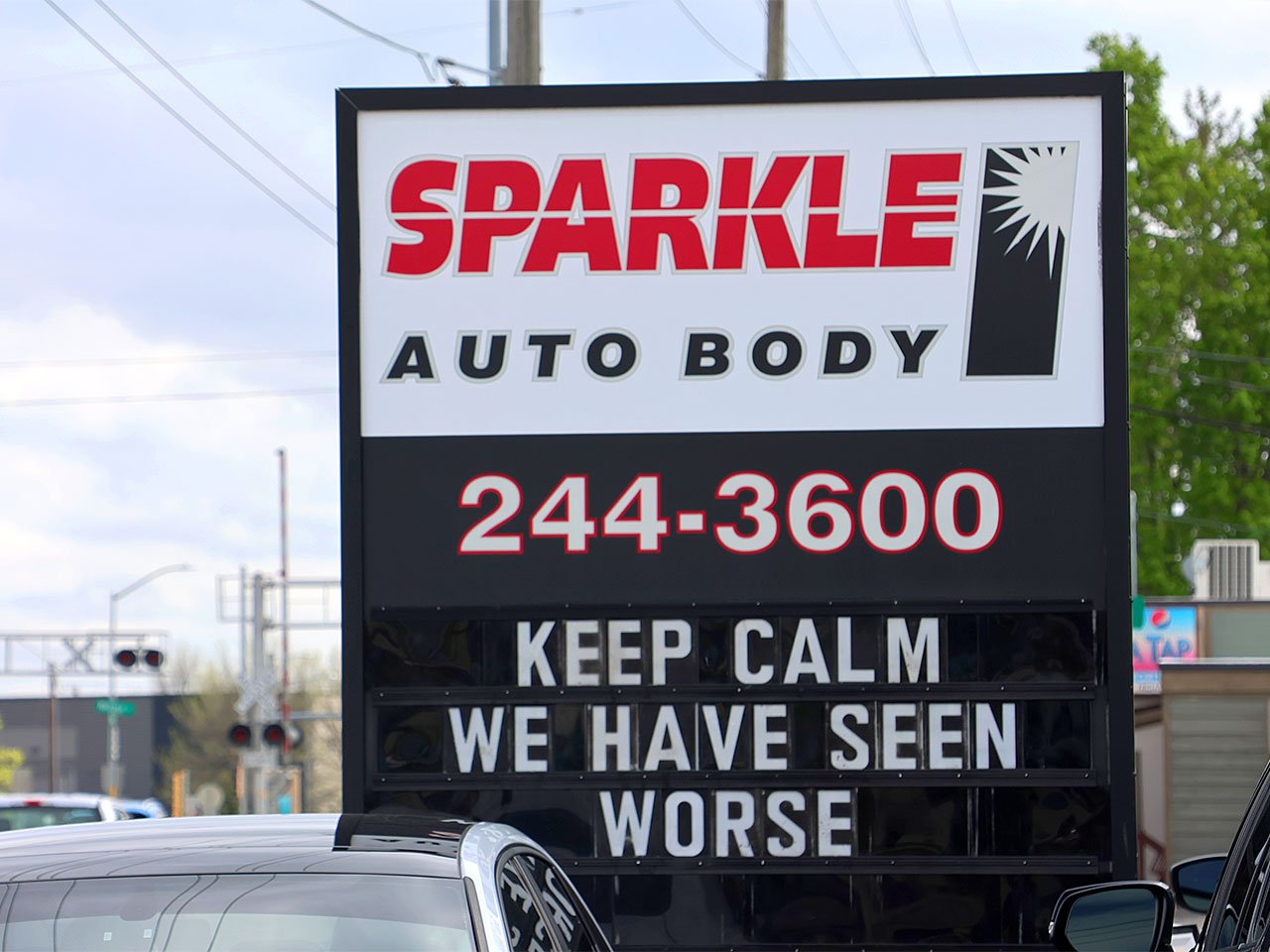
Data centers drive town halls in Potosi and Beaver Dam, and a New York Times article puts together more puzzle pieces about Port Washington. A Charlie Berens quote ends up on a watermelon.
In Beaver Dam

Drive northeast from Madison on Highway 151 and within the hour, you’ll enter Beaver Dam, where construction on a Meta data center campus is underway.
The development, organized for years under shell corporation Degas LLC, will take up 700,000 sq. ft. situated in rough triangle between US Highway 151, and County Highways A and W.
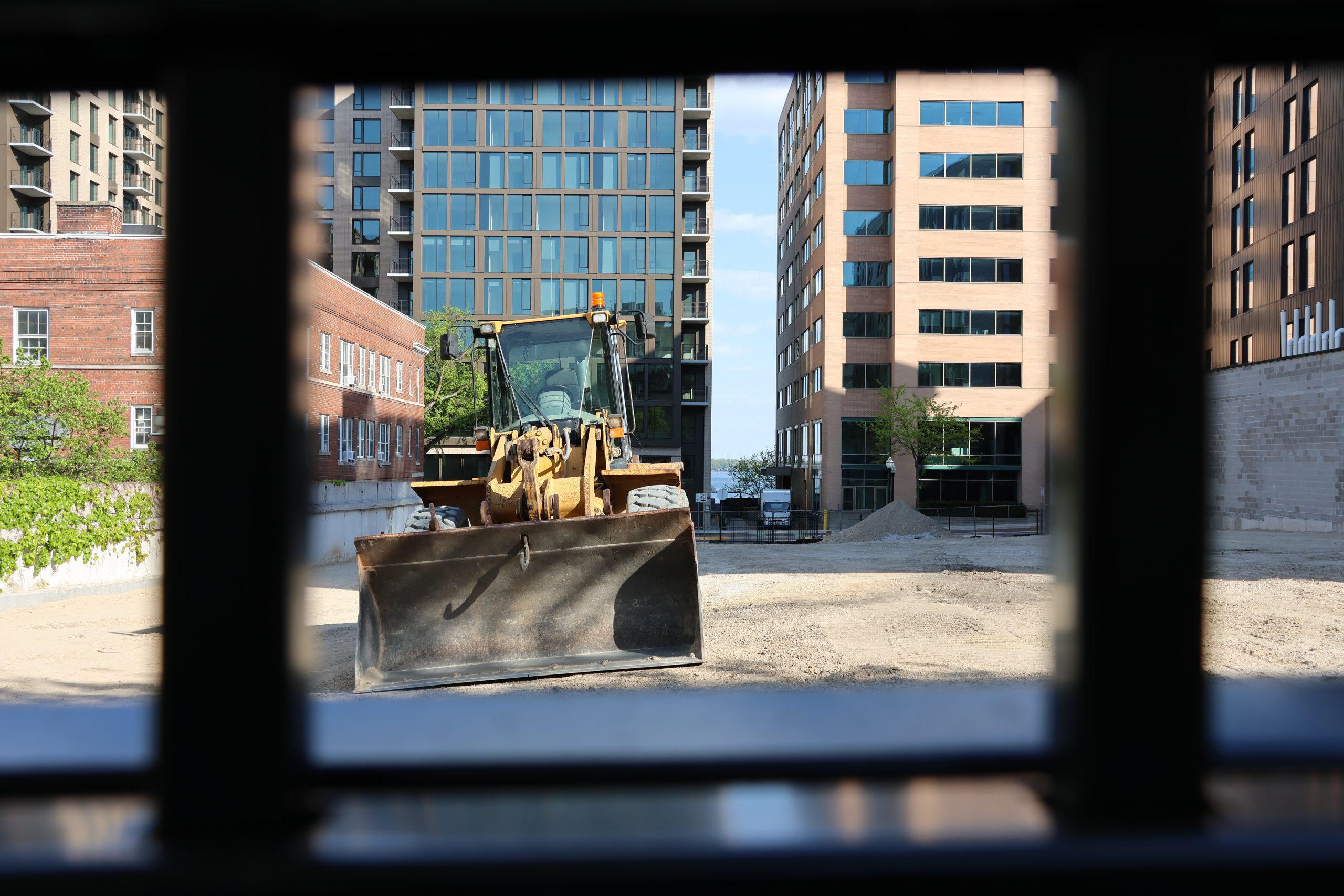
Buildings are going up at the south end of the road. As you drive up, you can see white hoop shelters. At the north end, electrical equipment to power an ATC substation is strewn out on the ground. Across the way, a brown expanse is dotted with orange flags and cones.

The highway is rocky and dump trucks were whizzing by as I struggled to find a place to pull over on Wednesday. But the parking lot of Harmony Baptist Church, in the middle of the development, looked like a refuge.
Pastor Peter Ostrander and his wife, Laura, still own this five acres of land in the middle of the Meta development. They’ve been here since 2014, after purchasing the former schoolhouse for $68,000.
The Ostranders recall Alliant Energy coming through the area around 2019, seeking a large tract of land to attract a large industrial development. At the time, the option to buy land was $20,000 per acre and one and a half times the assessed value of buildings. In the end, the Ostranders were offered $250,000 for the land and the church.

They rejected the offer because it didn’t make financial sense. That was before they knew who would be coming to town. Later on, “you didn’t have to be an investigative reporter to find out,” says the Pastor.
“Because we were connected to the project, we would receive information from the DNR and say, a wetland protection meeting is taking place, you know. You can come if you want. Well, it just took a little bit of internet searching to realize that this Degas LLC was representing somebody else, and then as early as I think February of last year, when Forbes identified Meta as the parent company behind the whole thing.”
Alliant and the main construction company Mortensen has been “generally very good” in communicating, say the Ostranders. There have been some frustrations and inconveniences. Their driveway keeps getting torn up from construction. The water runs brown and black, but they didn’t drink the water before. It was full of nitrates from the farmland.
“From a church congregation, we have stayed out of the fight, so to speak. Because we have bigger issues. We could maybe engage in the battle. But people are still dying, and on their way to Hell. Our message is the Gospel of Jesus Christ, not no data center.”


In nearby Juneau, a community town hall
I was in the area for a town hall on data centers, where —by my count— hundreds showed up at a community center in the nearby city of Juneau.
“We’re here today talking about Meta’s AI data center, and Mark Zuckerberg, he’s got this famous quote: move fast and break things. And if trust is a thing, I think you probably broke it a little bit here,” said comedian and journalist Charlie Berens in kicking off the event.

A Wisconsin Watch report in January found that several data center projects, including in Beaver Dam, were kept under wraps through non-disclosure agreements. A bill pending at the state Capitol would ban the use of such agreements in data center deals.
“Most people had no idea the AI data center was there until it started being constructed. And that’s why this room has got so many different walks of life here. I mean, there are Democrats here, Republicans, there’s liberals, libertarians. There’s farmers, there’s fishes, there’s hunters, there’s swingers,” joked Berens.

The town hall in Beaver Dam mirrored the format of a town hall just a few days prior in the the Driftless, in the Village of Potosi. A data center has been proposed twenty minutes away in the Village of Cassville, reports Wisconsin Watch.
Both events had some of the same speakers, including Berens and fiscal hawk Prescott Balch, a retired tech executive who organized opposition to a now-dead data center proposal in Caledonia, largely by unpacking financial claims. Balch is now lending his experience in interpreting financial documents in other communities. He’s also running for Caledonia Village Trustee.

The event ran late into the evening. It featured a growing network of subject matter experts who are sharing their resources statewide. At the same time, residents who live nearby to the proposed development gave their testimony.
Emily Luy Tan is born and raised in Beaver Dam. She lives less than a mile from the construction site. In 2024, a neighbor asked her if she’d heard about an industrial site coming to a field across from their property.
“The next day, I went to the Beaver Dam City Council to try to see if I could get any answers, anything at all. And I got nothing. I was pressing the city administrator at the time to get some type of information about what was going on in my literal backyard, and he had the gall to ask me, ‘Why do you care?’
I then watched over the next few weeks as the city unceremoniously, and unanimously, annexed and rezoned this land to the city of Beaver Dam. Still with no idea what was coming. In these meetings where huge decisions were being made for our town, my mother and I were some of the only people… in the room.
And I thought I was going crazy. I’m like, is this not a huge development that’s happening at the time, and nobody’s talking about it? Was this just how things happened in local government? I had no idea.”
Beaver Dam is facing a second data center proposal. This is a separate class of data center, distinct from a hyper scale or even a co-located data center, that is instead call an “edge” data center.
The point is to store digital data as a local distribution hub, decreasing reliance on data centers that might be further away. This means, essentially, that your internet buffers faster. According to a fact sheet provided by the city, the newest data center would sit on 90,000 sq. ft. and use up to 16 MW.
Oppidan Investment Co, who is bringing the proposal, is based in Minnesota, where they have two developments underway. They have projects in Nevada, Texas, New Mexico, and Illinois, according to Data Center Dynamics.
Organizers say that this issue is scheduled to come before the Beaver Dam Common Council on Monday, but an agenda hasn’t been posted at the time of writing.
In Dane County

Prompted by the now-dead QTS proposal in the Town of Vienna, a Dane County committee is looking ahead to future proposals. It meets monthly on the second Tuesday of the month.
The committee’s charge is to consider things like energy, water, economics, zoning, and regulatory questions, and develop recommendations for Dane County communities by next year.
I attended the committee’s first meeting in February, and Isthmus was kind enough to let me write a story on the committee’s charge and a post-mortem on the QTS proposal from last fall.
The advisory committee met again this week, where they heard a presentation from Brian Ohm, retired professor of planning and landscape architecture at UW-Madison.
Data centers, Ohm says, are not the only contentious land use issue in our state’s history. Here are some others: shopping malls, cell towers, big box stores, concentrated animal feeding operations, wind and solar farms, and frac sand mines.
And apart from federal and state rules, how land use projects unfold is a highly local affair. Even county zoning, I’m learning, is a patchwork across Wisconsin.

The committee has a landing page where they plan to post resources as work progresses. They’ve already posted one — an overview of data center legislation in Wisconsin.
News in brief:
- Wisconsin Watch: “Data centers fuel $1 billion in Wisconsin business growth, but some question long-term impact.” Regal Rexnord in Milwaukee, Generac in Waukesha, Modine in Racine, Trane Tech in La Crosse, Excellerate in Little Chute are some of the businesses getting orders from data centers. (March 3, 2026)
- Wisconsin Public Radio: “Town of Beloit has pre-development agreement with company looking to develop data center.” Corporation documents registered with the state used the same name and email associated with the entity operating Meta in Beaver Dam. (March 5, 2026)
- The Daily Cardinal: Legislators, UW professor talk future of Wisconsin data centers. A bipartisan panel at UW-Madison talked through data centers’ energy demands, correlation with AI, and more. (March 5, 2026)
- The New York Times: Meet the A.I. Prospectors Tapping a Billion Dollar Gusher. Seattle start-up Cloverleaf is the force identifying viable land and “untapped” energy and power sources, then striking deals for some of the world’s largest tech companies. They put together the deal in Port Washington with Vantage Data Centers, but abandoned another project in the Village of Greenleaf in Brown County in January. (March 5, 2026)
- WeAreGreenBay: Greenleaf passes resolution to protect against data center projects. This week, the Greenleaf Village Board passed a resolution requiring voter sign-off on zoning changes related to data center development. (March 12, 2026)
- WKOW:Residents voice concerns about potential data center at information session. Residents in Beloit gathered at the library on Wednesday (March 11, 2026).
- Milwaukee Journal Sentinel: Rapid data center expansion fuels worries about Wisconsin projects. The JS begins answering reader-submitted questions regarding data centers, which include, “What happens if the AI bubble bursts?” (March 11, 2026).
- WBAY: Wisconsin Supreme Court candidates address data center issue. I’m not sure this headline is accurate, given that the candidates appear to have talked around the issue. Nonetheless, data centers continue to seep into political races. (March 10, 2026)
- More Town of Beloit news: Cambrin LLC, which uses the same email in documents as the Meta development in Beaver Dam, has signed a “pre-development” agreement with the Town of Beloit. Organizers plan to testify in front of the Board of Supervisors on the development this coming Monday.
That’s all for now!
This weekly newsletter is attempting to do something a little different: round up the data center news across Wisconsin, and present the patterns that emerge.
I’m starting this out of a personal habit of aggregating developments and data center news, and a way to organize notes for longer research projects. Then I figured, why not share the notes with you?
If you like it, hit the subscribe button below.