
Last week, I left this newsletter on a cliffhanger: where in the world is a data center that says it puts the environment ahead of profits? The answer is outside of Wisconsin. To find it, I drove east to Milwaukee, and on to sovereign land.
Data Holdings was built thirteen years ago by Potawatomi Ventures, the economic development arm of the Forest County Potawatomi. It was built on the former Concordia University campus, which the tribe now owns via a federal land trust.
The data center is part of the tribe’s larger effort to diversify businesses outside of gaming while ascribing to the Seventh Generation ethic: the idea that decisions today should ensure sustainable consequences for seven generations into the future.
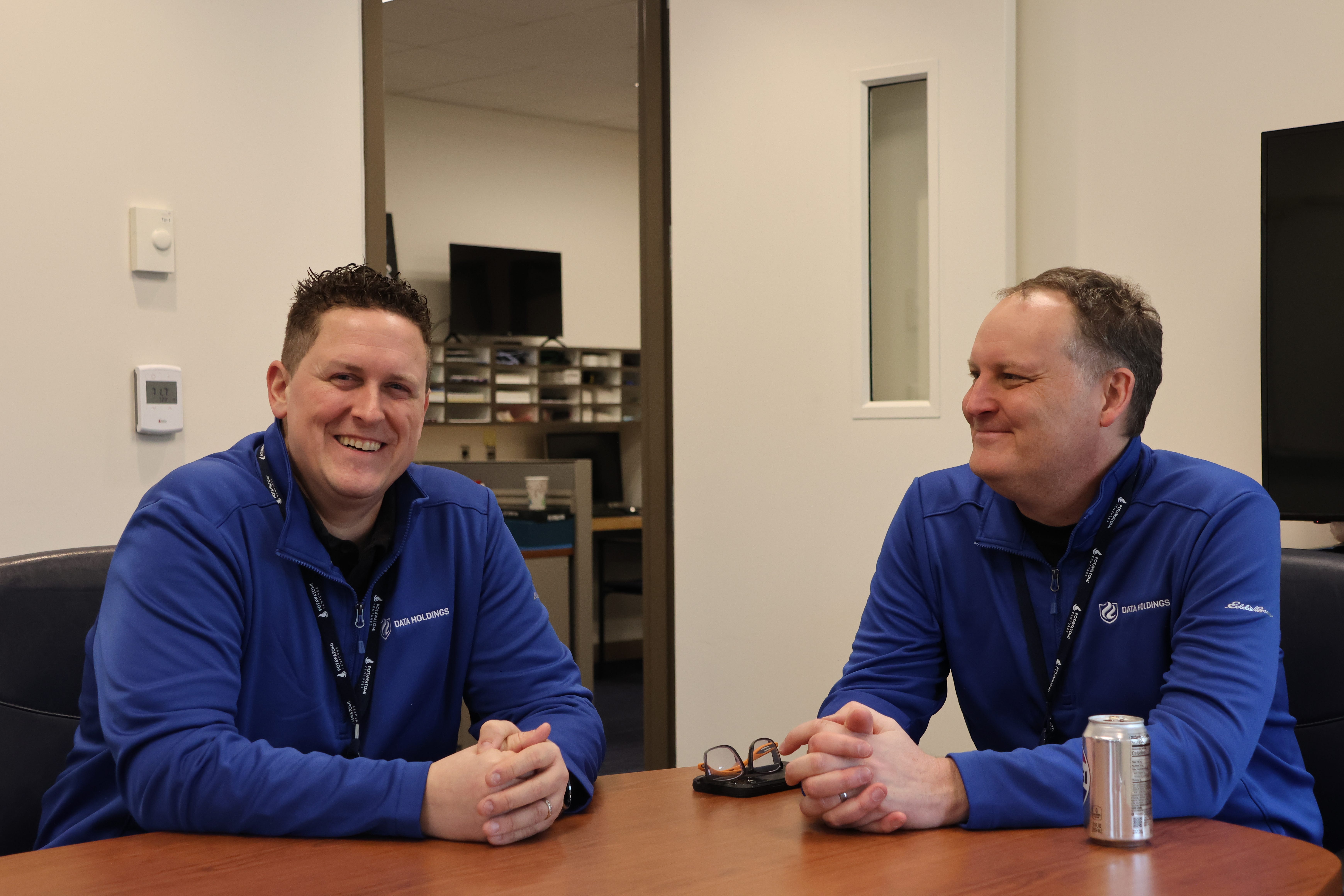
“This data center should not exist in Wisconsin. It should not be here. And the reason I say that [is because] it is so nice. Nothing else like it is around, because it was done right,” says Ryne Cooper, Director of Growth, who is all smiles and clearly loves his job. He greets me after I’m buzzed through a gate and present a government-issued ID.
“As with anything, there’s a right way and wrong way to do things. This data center aligns with tribal values very well. Most businesses are looking at next quarter. They put profits over people, [but] that is not what we do here,” says Cooper. He adds that before the data center was being constructed, every design detail was meticulously mapped out down to the last floor tile.
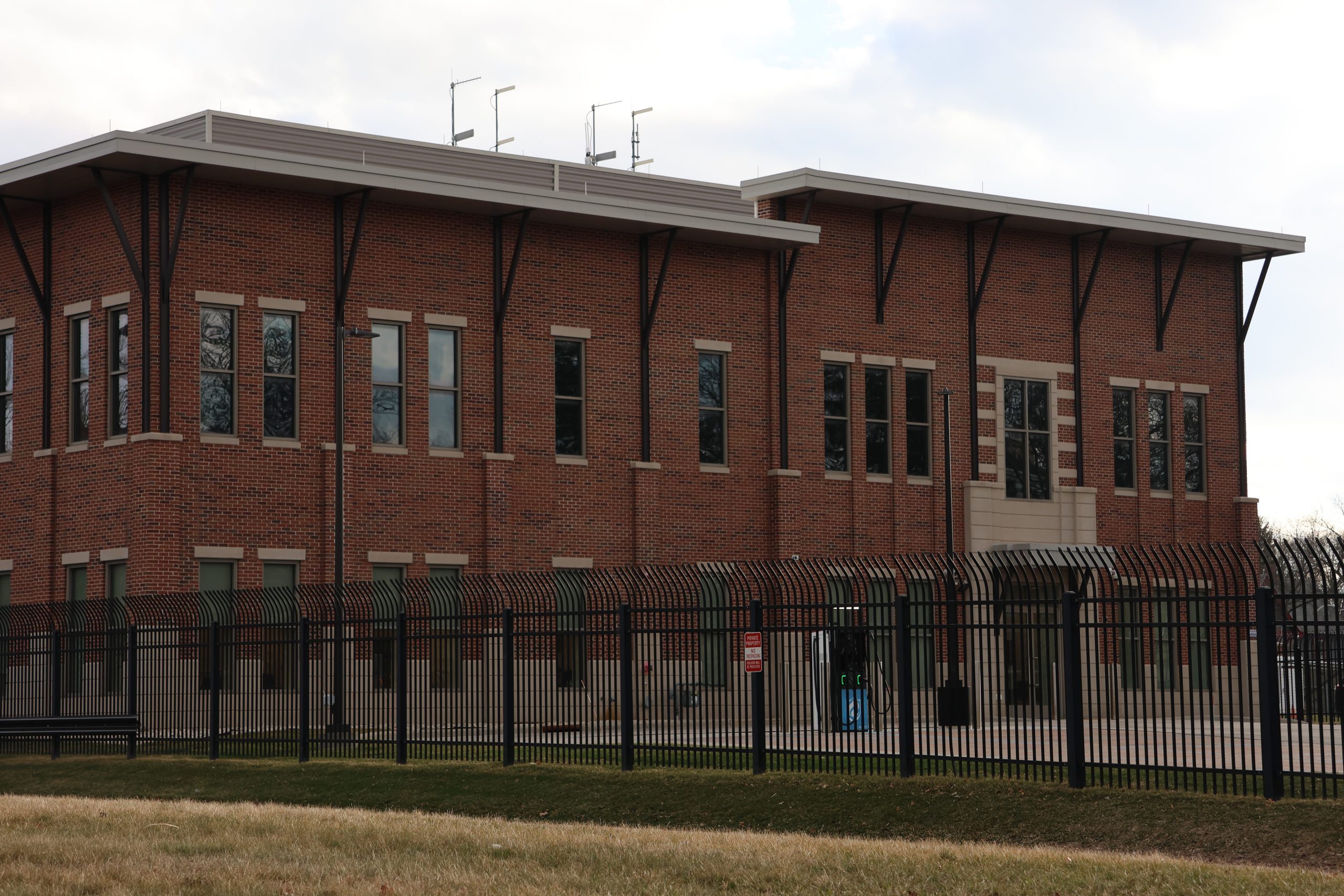
From the street, 3135 W. Highland Blvd looks like an administrative building that, if anything, is oddly fortified. But the servers inside are powering hundreds and hundreds of companies, government agencies, and nonprofits. Most of the 70-80 customers are managed service providers that, in turn, power hundreds of sub customers.
Cooper’s cagey on telling me most of their customers — it’s central to data privacy, after all — but I can tell you this one: the State of Wisconsin Department of Administration, which has its own private suite. And this one: the Mount Olympus Water & Theme Park Resort in the Dells.
“What it’s used for is businesses in the region to put their equipment, server, data, apps somewhere that’s always going to be online, and always going to be secure. That’s our value proposition,” says Ryan Brooks, Chief Technology Officer and General Manager, who’s been involved in building internet infrastructure for a long time.
He is, says Cooper, “part of the reason that we have the internet in Wisconsin.”
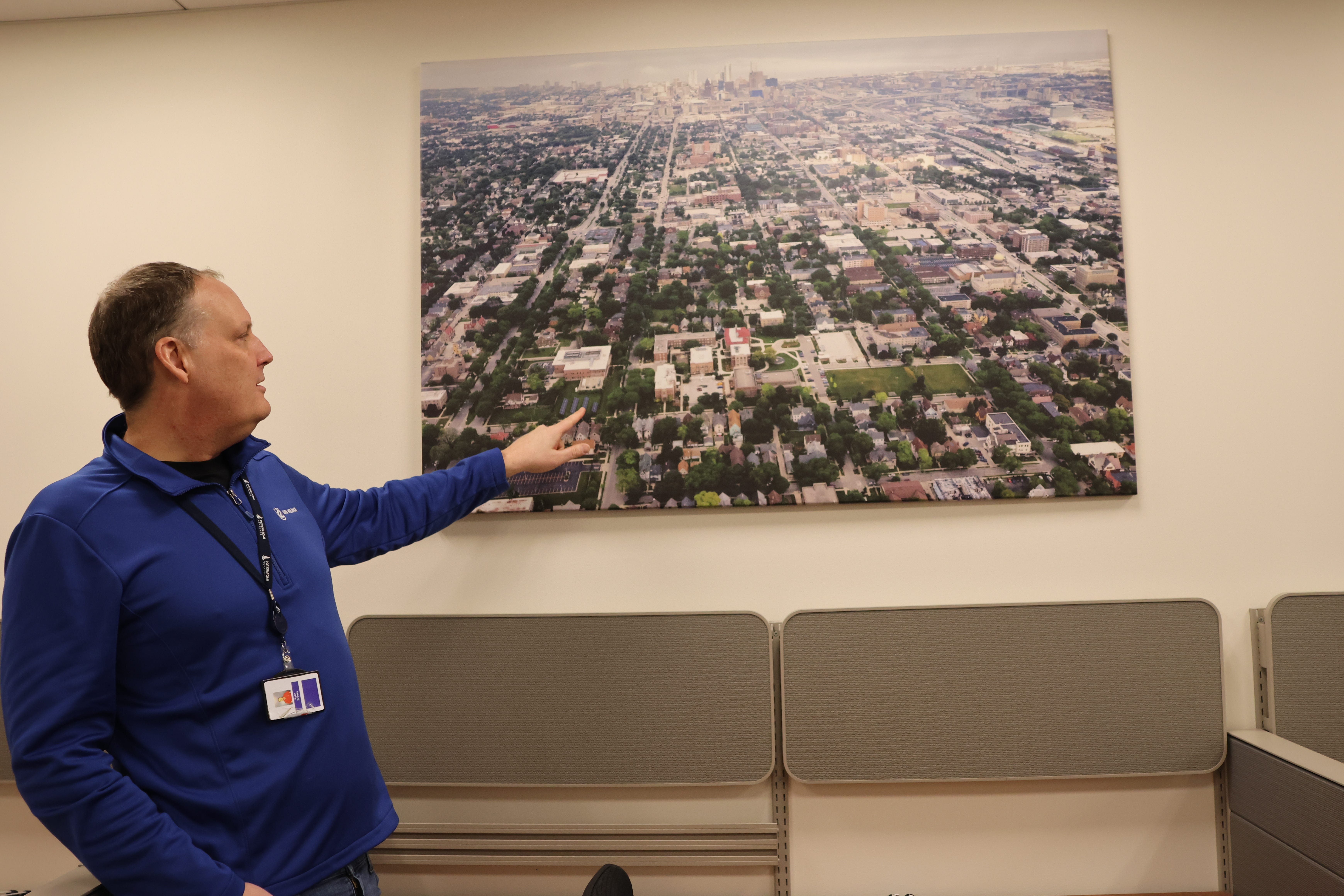
Both Cooper and Brooks know “data center” has become a dirty phrase. But Brooks is blunt: in his view, this is the best data center in the Midwest. It’s purpose‑built. It wastes less and has more security than anything nearby.
Cooper, meanwhile, has turned the stigma into an opening. He says he likes telling people he works at a data center precisely because of the reaction it gets.
“People will be like, ‘Oh, you work in a data center.’ And I’m like, yeah — but not just any data center. Come in. I’m gonna show you. We’re gonna open up the curtain, come behind the scenes. We’re gonna show it all to you.”
A quarter of voters say is their top concern with data centers, according to new polling from Wisconsin Conservation Voters, is water use.
This data center uses a real closed loop water system, meaning, outside of the restrooms and the sink, water does not leave or enter the building. The biggest water use is from brewing the coffee.
“If a drop leaves your building, it is not closed loop,” says Cooper. “Because as you’re running that water over chips, you’re putting heavy metals in it, you’re putting forever chemicals, you’re contaminating it. I don’t care how many reverse osmosis systems you put through it: you’re contaminating it, and it’s not closed loop.”
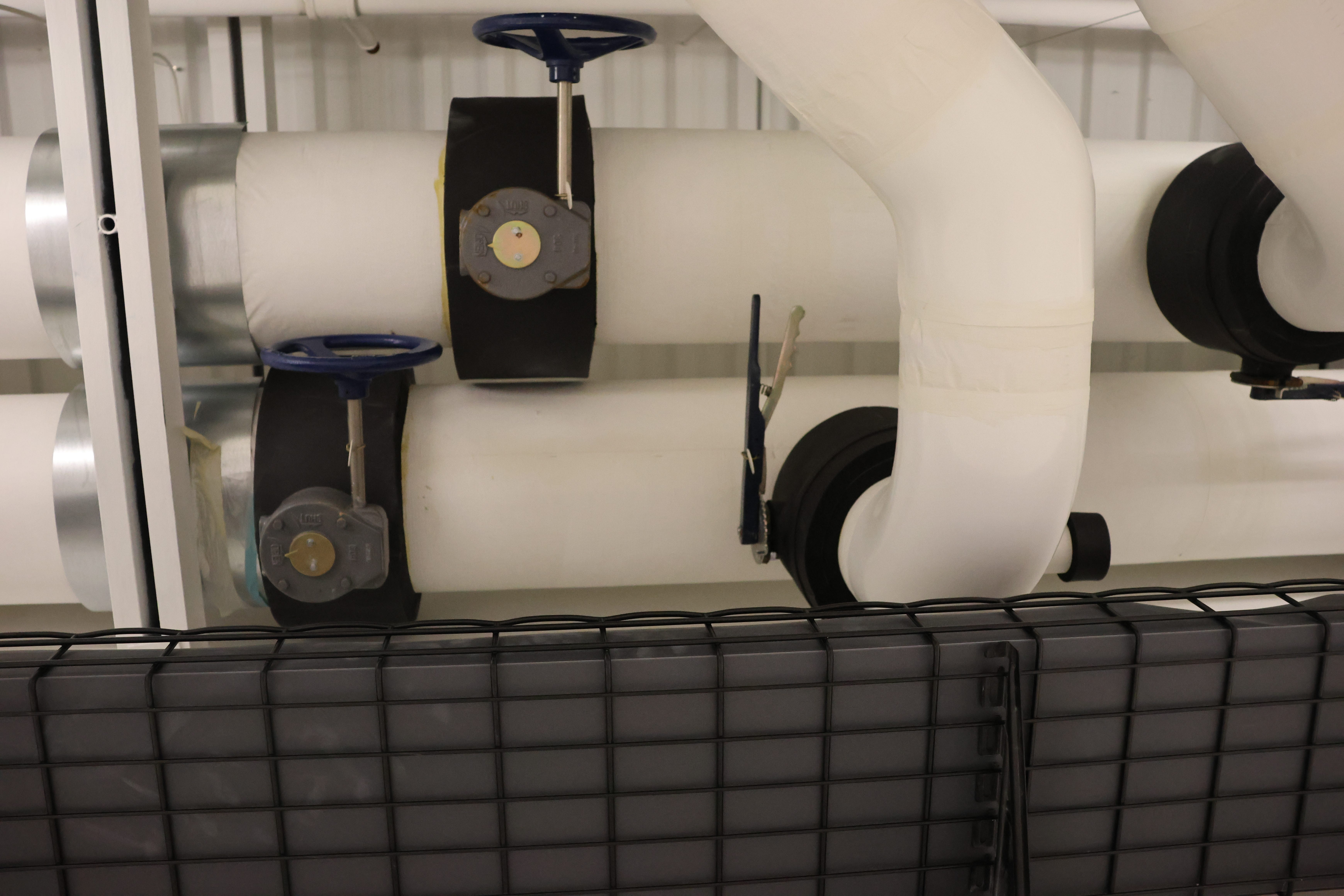
The water chills the immense amount of heat generated by server rooms. The water is cooled by chillers on the roof, but when it’s below 50 degrees, the outside air does the work. It’s just powered by a fan that blows the cold air over coils.
Inside the white pipes is a mixture of water and glycol — a foodsafe, nontoxic version of antifreeze. When there’s a leak, the mixture is reclaimed and put back in to circulation.
The most potent angle of opposition, according to the same polling from Wisconsin Conservation Voters, is that data centers should pay their full share to power these facilities.
Data Holdings gets most of its power through a raw feed from WE Energies. It was one of the first expenses when they started developing the property.
“The tribe wrote the check and paid to have it run themselves, because they weren’t going to put the burden on the community, because it is not the community’s burden,” says Cooper.
Since this is sovereign land, they don’t pay taxes on the power. But from the direct feed, the tribe runs its own power operation. They have their own substations, and their own electrical field. Each has a completely independent circuit to the server room.
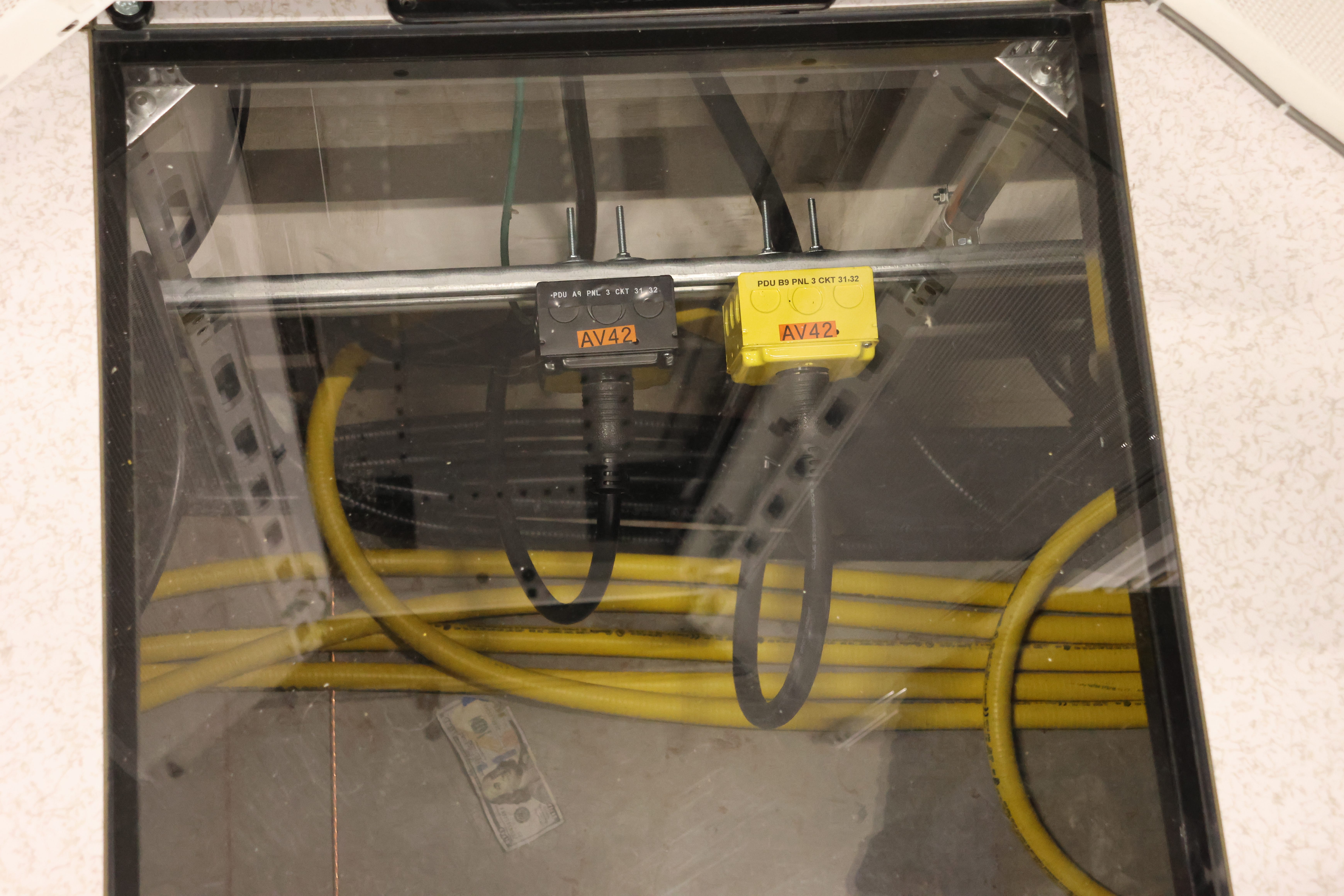
Each power field runs 8.6 megawatts. If both fail simultaneously, enough backup UPS batteries are there to keep the servers online while two diesel generators power up.
These diesel generators are in their own dedicated room. They’ve never been needed in an emergency but are regularly tested. They’re kept inside thick indoor walls, and the cacophony of running them doesn’t reach outside the building. Above the generators are special hoods which catch and filter the exhaust instead of running it into the atmosphere.
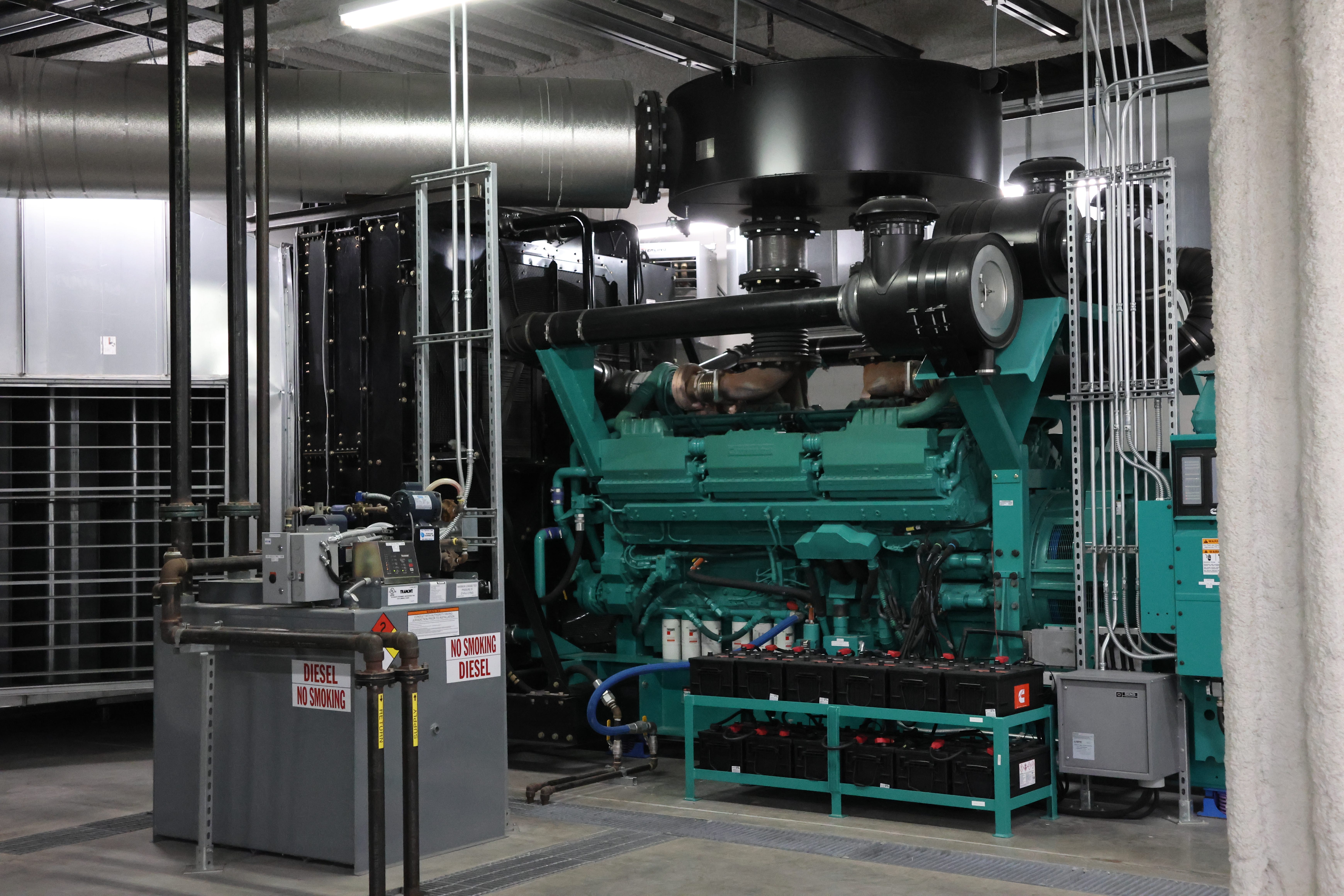
Suspenders, belt, suspenders
Entryways throughout the building have a variety of failsafes to prevent both intruders and human error. The building itself has a thick concrete roof, and is designed to withstand a direct hit from an F5 tornado.
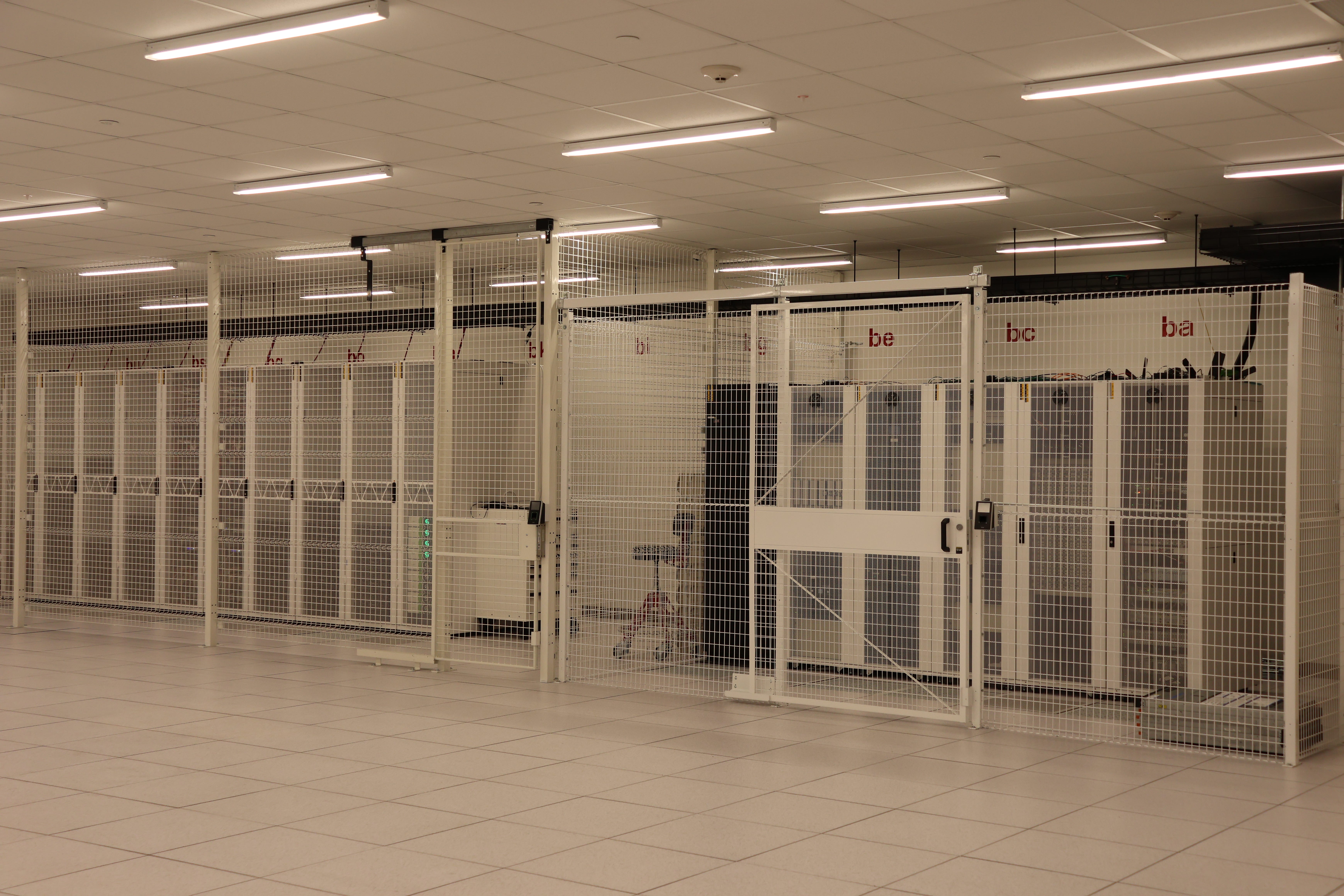
In the server rooms, it’s a clean, crisp white. The data servers sit above three ft. raised floors that carry chilled air and power. The cool regulated airflow blows my skirt up. The ceilings are outfitted with air sensors that can pinpoint smoldering hours before a fire breaks out. They’ll send an alert, down to the exact floor tile.
Over and over, there are design details that add redundancy. They also reduce risk.
Cooper compares the design to wearing two pairs of suspenders. Even if one fails, you have another pair of suspenders so you don’t get caught with your pants down. Each year, he gets another hashmark tattooed for another year without an outage. He waits a couple months until the year is over, so he doesn’t jinx it.
If you’ve been following this newsletter, you’ve seen a different picture of data centers: hyperscale proposals wrapped in non‑disclosure agreements, tax incentives measured in the hundreds of millions, and projected power and water draws that outstrip our current power generation.
Data Holdings is a counterexample hiding in plain sight; proof that the phrase “data center” can mean very different concepts.
It doesn’t ask the public to pay for it. It’s smaller than a hyperscale data center; about 1/25th the size of the Microsoft campus. It exists because a tribe was willing to spend more up front to build the thing it wanted in its own backyard.
Data Holdings was built well before most people knew the term data center, and well before the state Legislature established tax breaks for large data centers in Wisconsin. Data Holdings wouldn’t qualify for those tax breaks for two reasons. Colocated centers like this are ineligible. And again, we are on sovereign land.
And here, sovereign land translates to sovereign data. That’s important, when private tech companies are contracting with the federal government to build intelligence profiles on citizens. Here, data falls outside the federal government’s jurisdiction.
Cooper told me he often reminds other tribes that if their backups live in AWS or Azure, their information is effectively under U.S. federal control. Storing that data under tribal jurisdiction allows sovereign nations to access the data they need and, frequently, don’t get.
There’s just one other tribal-built data center that Brooks and Cooper can recall, and it’s in the Southwest, built under the authority of the Navajo Tribal Utility Authority.
“The Data Center being built on Sovereign Navajo land emphasizes the significance of autonomy and control over technological resources and services provided within the Nation,” according to the facility’s webpage.
Email cutting off? Head to wisconsindata.substack.com to read this full post in the app. If you know someone who’d like to subscribe, why not share it with a friend or colleague?
The vote heard around the nation
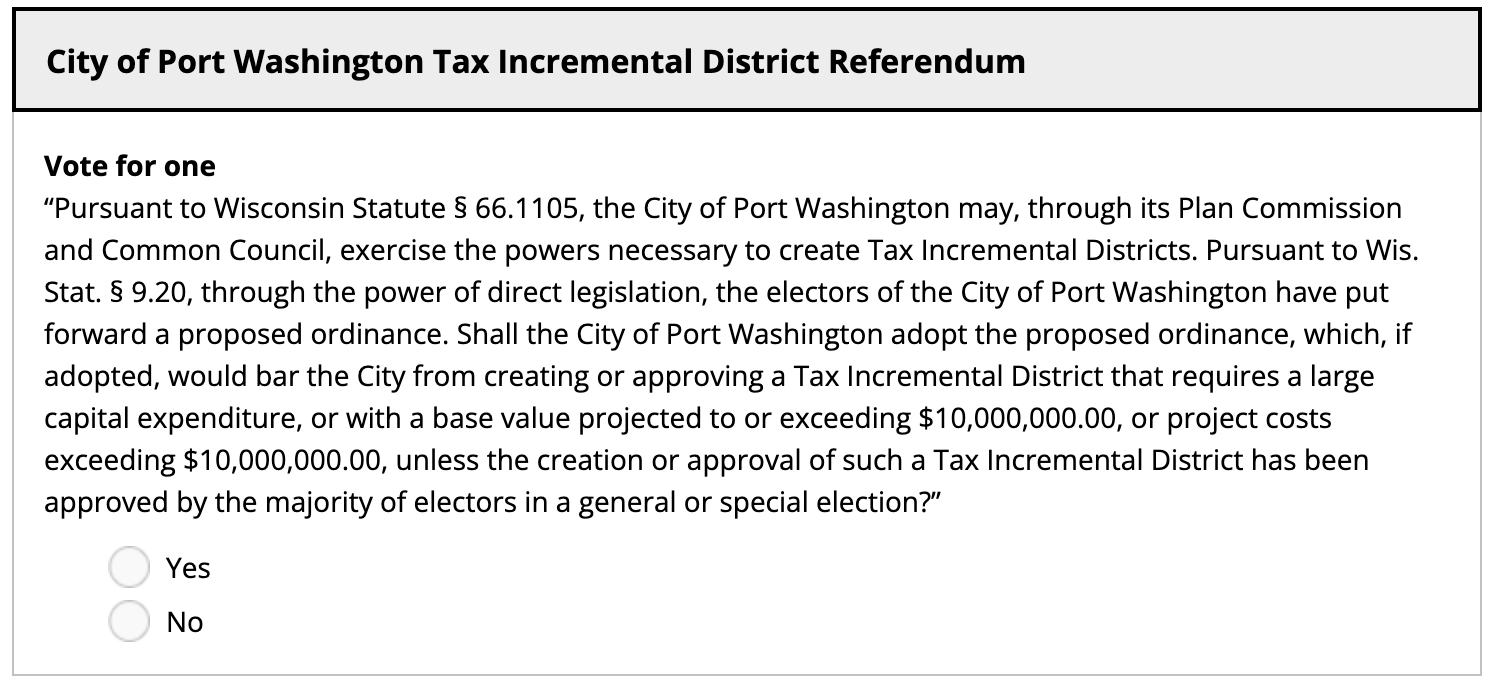
Elections, the saying goes, have consequences. In Port Washington on Tuesday, voters approved a referendum that’s been widely described as the first ballot item about data centers in the country. POLITICO’s Tyler Katzenberger (a former Madison journalist) previewed and then recapped it, as did The Hill, WPR, and so on.
Port Washington’s massive OpenAI/Oracle “Stargate” campus is of course the impetus. But the referendum language itself doesn’t mention data centers. Instead, it prevents a municipal development tool from being used for massive projects in the future without voter approval. The name of that tool is tax increment financing, or TIF.
What’s TIF, and what’s a TID? There have been tomes written on these topics. Historically, tax increment financing has helped to make otherwise impossible projects work.
Think of a blighted waterfront property that no private developer would touch because the upfront costs are too high. By creating a TIF District, or a TID, the city can promise to reimburse a developer over time from the new tax revenue generated within the district. When the bills are paid, the TID closes, and the higher property value goes back on the normal municipal tax rolls. Everybody wins.
But, this traditional economic tool gets thrown out of whack when we’re talking about hyperscale data centers. The numbers become so large that decisions about how quickly to raise the overall tax levy, who bears the risk if things change, and how long the money is locked inside the TID can have real consequences for everyone else’s tax bills, even if you live outside of the district.
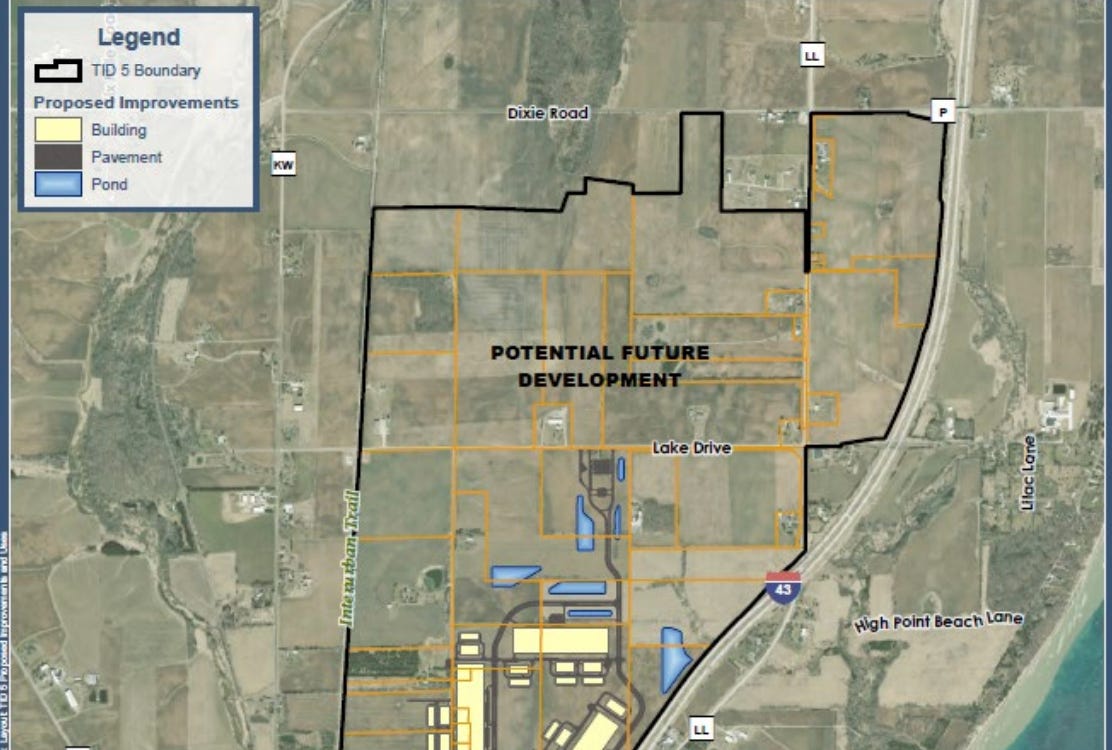
So how did Port Washington get this passed? They used a section of state law that allows electors in villages and cities to place legislation on the ballot. Towns, interestingly enough, don’t have the same right of direct legislation under a 2023 Supreme Court decision, I noticed.
But getting the ballot question placed wasn’t without a fight. Business groups are still suing to block it. In a press release, the data center opposition group organized against development in Port Washington touted the results. “Tonight, democracy worked the way it’s supposed to,” said organizer Christine Le Jeune. “The people deserve a seat at the table when their tax dollars are on the line.”
Elections outside Port Washington
- VERNON COUNTY: Organizer Krista Browne was elected mayor of Viroqua. She’s part of a coalition organizing opposition to Maribell 765kV transmission lines being built in Vernon and Crawford counties.
- RACINE COUNTY: Retired financial tech executive Prescott Balch, who’s been advising communities on the implications of TIF for data centers since a proposal in Caledonia was halted, won election to Village Trustee in Caledonia, which last fall faced a proposal from Microsoft.
- DUNN COUNTY: Matthew Crowe was elected mayor of Menomonie. He replaces longtime Mayor Randy Knaack, who’s been mayor for the past decade and a half. Crowe says “data center transparency” helped him win.
- EVEN OUTSIDE WISCONSIN: In Missouri, every incumbent council member lost after supporting a $6 billion data center plan.
- THIS FALL: Another data center referendum, this one on the GM/JATCO site, will head to Janesville in November.
Other news in brief
📈 There’s new data about data center messaging.
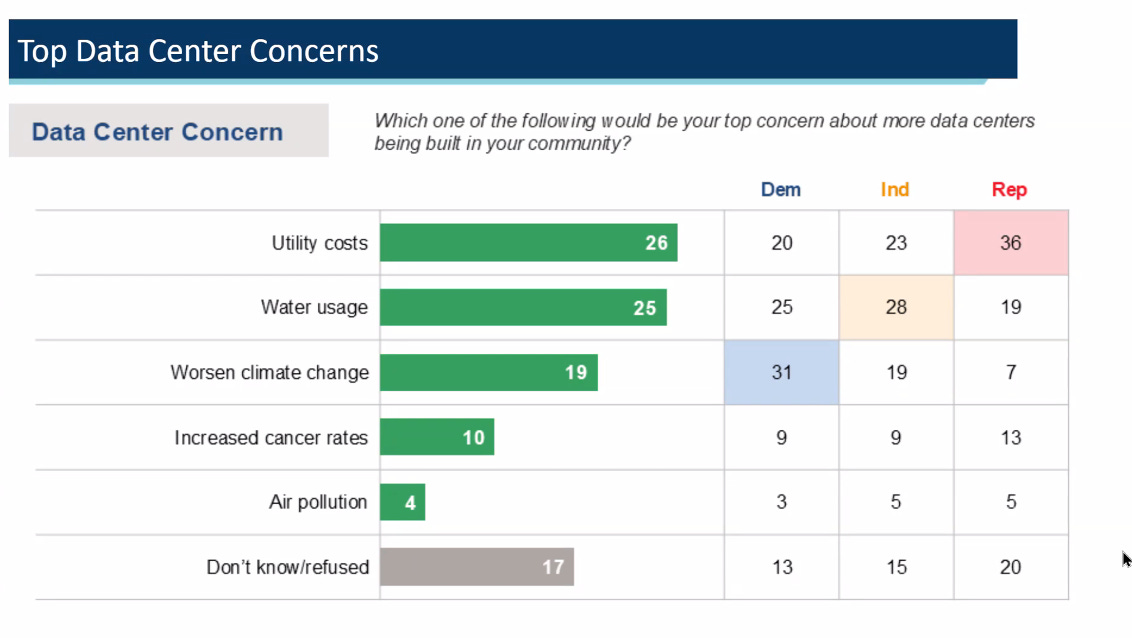
A webinar this week from the Wisconsin Conservation Voters outlined results of recent polling about data center messaging, ahead of the many elections coming up this fall.
The full candidate messaging guide is here, and I wasn’t shocked to learn what the top issues are for voters. But what was surprising is that each party has its own different top concern— utility costs for Republicans, water use for Independents, and climate change for Democrats.
That seems to track. Over the weekend, Republican candidate for governor Tom Tiffany said he’d end tax subsidies for data centers in Wisconsin.
🌊 More on the water impacts of data centers.
An event at the Marquette Law School on Wednesday focused on the intertwining between energy and water use.
“The real key with a lot of this is looking at the siting of [data] centers, and that’s something that isn’t being done in Wisconsin or nationally,” said Cheryl Nenn, with the nonprofit Milwaukee Riverkeeper.
“ Just how fast these data centers are coming online, the regulations are not keeping up, and we’ve been left flat-footed as far as putting in any kind of federal or state regulations to protect water supplies.”
🌊 This Beaver Dam farmer’s well has dried up
A family farm’s well started drying up in February, reports WKOW. It’s the second to dry up in the last few weeks, and could be related to ongoing construction at the Meta site.
💡 Large customer rate cases plod along.
Two utilities are asking state regulators to sign off on contracts with Meta, Microsoft, and Stargate. Those contracts would determine the rates that tech companies pay to power their data centers — and whether it affects your pocketbook.
Wisconsin Power and Light (Alliant, close enough) is asking for sign-off for an individual rate with Meta in Beaver Dam. As of yesterday (Friday, April 10), a draft decision matrix had been posted in the case, which details the eleven main questions that PSC thinks it needs to decide. Among them: How long should the agreement last? Are charges reasonable? And what will Meta be on the hook for if the bubble pops, and they walk away?
We Energies is asking for sign-off on two new tariffs for “very large customers” and “bespoke resources.” A decision matrix in this case was posted about two weeks ago, meaning this case is likely to be decided first.
This case is somewhat more intricate, even asking where the tariff should start to apply. 500 MW? 250 MW? Or how about 100MW? Who bears the risk if things don’t go as planned? What kind of monitoring should happen? And many more complex arguments to define, and then mitigate, harm.
Earlier this week, WORT honed in on data centers, with a particular focus on these rate cases. I joined Tom Content from the Citizens Utility Board as a guest.
https://w.soundcloud.com/player/?auto_play=false&buying=false&liking=false&download=false&sharing=false&show_artwork=true&show_comments=false&show_playcount=false&show_user=true&hide_related=true&visual=false&start_track=0&url=https%3A%2F%2Fapi.soundcloud.com%2Ftracks%2F2297585699
💡 April 1 was rate day.
We Energies / Wisconsin Gas and Wisconsin Public Service Corporation are seeking to raise their electric and natural gas rates. You can start to dig through the applications online. (In my experience, the spreadsheets tend to be redacted, but the testimony has the juicy detail):
- 6690-UR-129: Application of Wisconsin Public Service Corporation for Authority to Adjust Electric and Natural Gas Rates
- 5-UR-112: Joint Application of Wisconsin Electric Power Company and Wisconsin Gas LLC for Authority to Adjust Electric, Natural Gas, and Steam Rates.
Rates are usually decided in the week after the November election, and if approved, take effect January 1 of the following year.
💡 ATC, and perhaps We Energies, eye competition as such a drag
Here’s a good time to introduce a fun fact — ATC is the nation’s first transmission-only utility. It was formed in 2001 by the Wisconsin Legislature, out of the “same nationwide deregulation movement that spawned Enron,” according to this fantastic piece in Isthmus from 2007.
Here’s another fun fact: ATC is owned by other utility companies. They’re more than 60% owned by WEC Energy Group, which is the parent company to We Energies, the same utility slated to power the Microsoft campus in Racine County, along with the Stargate campus in Port Washington.
Which is why it’s interesting that ATC and a coalition of other utilities, including Xcel, are asking federal regulators at FERC to temporarily pause a requirement to bid competitively on transmission projects. A complaint was filed on Tuesday, and now other groups have asked to intervene.
If you read associated testimony from Robert J. McKee, Director of Interconnection Solutions for ATC Management Inc, the corporate manager of American Transmission Company LLC, , you’ll come across this nugget:
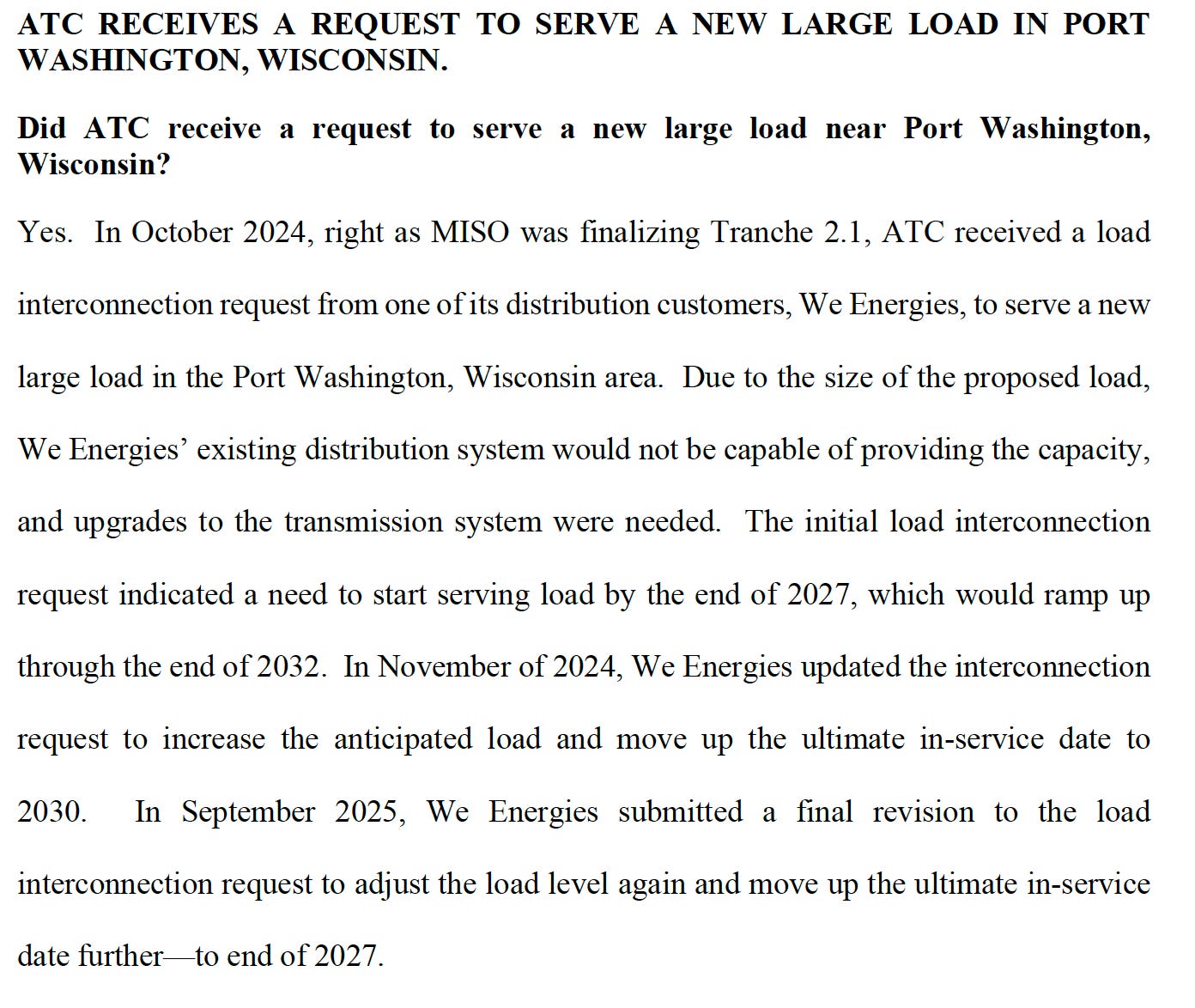
The testimony goes on to bemoan that ATC’s application to build three substations —in Fond du Lac, Ozaukee, and Sheboygan counties — for the Port Washington project were denied in favor of Viridon.
But MISO (the Midwest regional grid operator) reassigned the substations to ATC last month, after it became clear Viridon could not complete the substations by December 2027.
“This episode,” says McKee, “demonstrates the needless uncertainty and delay for transmission and large load customers, such as data center developers, caused by MISO’s Order No. 1000 solicitation process.”
Wisconsin Watch has a good roundup on the broad strokes of the argument: (Utilities seek federal pause on grid bidding amid AI-driven power demand). Consumer advocates, of course, argue that competition is good, and saves the customer money.
Events in brief
- Tuesday, April 14: Data Centers and a Sustainable Future (Madison, 8am)
Sustain Dane will host a breakfast series in Madison on data centers and a sustainable future (note: QTS has maintained its $1.5 million commitment to UW researchers on data center sustainability). Register. - Tuesday, April 14: Dane County Advisory Committee on Data Centers (Madison, 12pm). Dane County’s advisory committee on data centers will hold its monthly meeting. According to an agenda, they’ll get an update on data center legislation, hear from the Wisconsin Farmers Union on data centers, and give some context to Dane County land use.
- Tuesday, April 14: Hearing for Vantage’s air pollution permit (Virtual, 12pm). You can register online. The permit and other documents are filed under the “Permits and Permit Applications” tab here.
- Tuesday, April 21: Rock County Data Center Town Hall (Blackhawk Tech College, 6-8pm). Organized by No Beloit Data Center. More information here.
- Wednesday, April 22: Data Centers in Grant County (Lancaster, 7pm).
The Grant County Farm Bureau will host an informational meeting on data centers. - Wednesday, April 22: Water@UW-Madison Spring symposium (Madison, 2-5pm).A data science professor will given an overview on the “good, bad, and complicated” of AI use. A water policy expert will present on the “hidden environmental costs of AI data centers.” Free, but register.
- Thursday, April 23: ICE and Data Centers (Sheboygan, 6pm).
Labor organizer Ric Urrutia, co-host of the Wisconsin Labor Podcast, will present in Sheboygan on what he terms the “interlocking corporate and banking interests of ICE and data center owners.” More info. - Friday, April 24: ICE and Data Centers (Manitowoc, 4pm).
Labor organizer Ric Urrutia, co-host of the Wisconsin Labor Podcast, will present in Manitowoc on what he terms the “interlocking corporate and banking interests of ICE and data center owners.” More info. - Monday, April 27: Brownfield basics (Janesville, 5:15pm). The last in a series of data center workshops. More information here.
- Thursday, April 30: Wisconsin Tech Summit (Oshkosh Corp. headquarters, $$). This year’s annual summit is focused on AI in industry, especially in health care, finance, ag, energy, and manufacturing. Remzi Arpaci-Dusseau, of UW-Madison’s new College of Computing and Artificial Intelligence, will deliver a keynote. Full speaker list here, and more info.
That’s all for now!
This weekly newsletter is attempting to do something a little different: round up the data center news across Wisconsin, and present the patterns that emerge.
I’m starting this out of a personal habit of aggregating developments and data center news, and a way to organize notes for longer research projects. Then I figured, why not share the notes with you?
Thanks for reading Data Processor! Subscribe for free to receive new posts and support my work.